.png)
Do I Need a Permit for a Fence in Queens and Brooklyn Guide

A new fence can make a Queens or Brooklyn yard feel private, finished, and secure. It can also create a headache if it is built too tall, placed in the wrong spot, or installed without checking NYC Department of Buildings rules first.
If you are asking, “Do I need a permit to build a fence in Queens and Brooklyn?”, the short answer is usually this:
Most standard residential fences in NYC do not need a DOB permit if they stay within the allowed height limits. For many homeowners, that means up to 6 feet in a rear yard and up to 4 feet in a front yard, with important exceptions.
This guide explains the basic NYC fence rules, what can trigger a permit or extra review, and why working with a local installer like Ridgewood Fence & Patio helps protect your property, your budget, and your peace of mind.

The basic NYC fence rule most homeowners need to know
For a typical residential property in Queens or Brooklyn, the most important fence rule is height.
In general, NYC allows:
Fence location | Common residential height limit | Permit usually needed |
Rear yard or backyard | Up to 6 feet | Usually no, if compliant |
Front yard | Up to 4 feet | Usually no, if compliant |
Fence above these limits | Varies | Often yes, or may not be allowed without review |
These are the basic working rules many homeowners run into when planning a wood fence. They apply to common residential fence projects, but individual properties can have special conditions.
Your fence may need closer review if the property is:
On a corner lot
In a historic district
Near a driveway or sidewalk visibility area
Connected to a retaining wall
Part of a multi-family or mixed-use building
Subject to deed restrictions, easements, or HOA-style rules
Being built around a pool, roof area, or other regulated space
This article is for general planning only. NYC rules can change, and site conditions matter. A fence contractor familiar with Queens and Brooklyn properties can help confirm what applies before work begins.
Backyard fence rules in Queens and Brooklyn
Backyard fences are usually more flexible than front yard fences. In many NYC residential settings, a 6-foot fence is the standard maximum for a rear yard without needing a DOB permit.
That 6-foot height works well for many common goals:
Blocking views from neighboring yards
Creating privacy around a patio
Defining property lines
Keeping pets and children away from alleyways or shared spaces
Replacing an old chain-link fence with a custom wood fence
A 6-foot wood privacy fence is common across neighborhoods like Ridgewood, Glendale, Maspeth, Bushwick, Williamsburg, Greenpoint, Bed-Stuy, and Bay Ridge, where row houses and tight lot lines make privacy a real concern.
Still, “backyard” does not always mean simple. NYC lots can be oddly shaped. Some properties have side yards that visually feel like backyards but may be treated differently depending on location and zoning. Corner properties can also create complications because one side of the yard may face a street.
That is where local experience matters. Ridgewood Fence & Patio measures the space, reviews the layout, and recommends a fence height and style that fits both the property and the code requirements.
Front yard fence rules are usually stricter
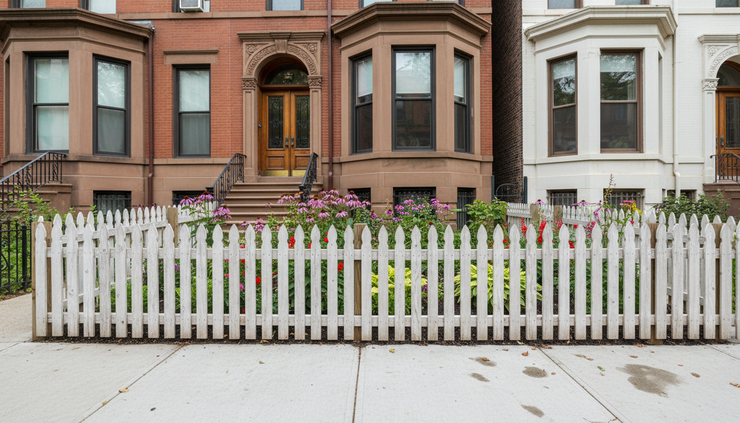
Front yard fences are more visible from the street, so NYC generally limits them more tightly. For many residential properties, the common maximum height for a front yard fence is 4 feet.
Front fences often serve a different purpose than backyard fences. Instead of full privacy, they usually provide:
A clear boundary between the sidewalk and yard
A safer edge for small children or pets
Curb appeal
Protection for plantings or landscaping
A finished look for the front of the home
Because of the height limit, front yard fence design matters. A 4-foot fence can still look substantial when the proportions, picket spacing, posts, caps, and gate design are handled well.
Common front yard wood fence options include:
Picket fences
Shadowbox-style low fences
Horizontal slat fences with code-conscious spacing
Decorative capped-post designs
Custom gates that match the home’s exterior
A front yard fence that is too tall may lead to complaints, DOB issues, or the need to remove and rebuild sections. It is much easier to plan the right height before installation than to fix a violation later.
When a fence permit may be required in NYC
Many standard residential fence projects do not need a permit, but that does not mean every fence is automatically exempt. The DOB may require permits or professional review when a fence falls outside the basic limits or connects to other regulated construction.
A permit or additional approval may be needed when:
The fence is higher than the typical allowed limit
The fence functions as a barrier around a pool
The fence is installed on or near a retaining wall
The project includes structural masonry, concrete walls, or major site work
The property is landmarked or located in a historic district
The fence affects visibility near a driveway, corner, curb cut, or sidewalk
The fence is part of a larger renovation or new construction project
A taller fence is one of the most common triggers. If a homeowner wants an 8-foot privacy fence, the answer is not as simple as “build it and hope nobody notices.” NYC may treat that differently, and zoning or building rules can prevent it in many cases.
Pool fences also deserve special attention. Pool barriers are regulated for safety and may have their own requirements for height, gates, latches, spacing, and climbability. If the fence surrounds a pool, do not rely only on the general 4-foot and 6-foot rule.
Landmark properties can add another layer. If a home is in a historic district, exterior work visible from the street may need review from the Landmarks Preservation Commission, even if the DOB would not normally require a permit.
Fence height is only one part of building to code
Height matters, but it is not the whole story. A fence can be the right height and still create problems if it is poorly placed or built in a way that affects neighbors, sidewalks, drainage, or safety.
Before installing a custom wood fence, several details should be checked.
Property lines should be treated carefully
A fence is often installed near a property line, but “near” and “on” are not the same thing. In tight Queens and Brooklyn lots, a few inches can matter.
A contractor should never guess based only on an old fence, a cracked concrete edge, or where a neighbor says the line is. Old fences are sometimes in the wrong location. Tree roots, patched concrete, and past renovations can make boundaries confusing.
For major disputes or uncertain boundaries, a survey may be needed. A good fence installer can work from the survey and help place the fence responsibly.
Gates need room to work safely
A gate that swings over a public sidewalk or blocks a shared passage can create problems. Gate placement should account for clearance, slope, hinges, latches, stairs, and daily use.
For example, a backyard gate in Brooklyn may open into a narrow alley. A front gate in Queens may sit close to cellar doors, steps, or a shared walkway. These details affect both code compliance and comfort.
Posts and footings need the right installation
A wood fence is only as strong as its posts. In NYC backyards, installers often deal with concrete, old masonry, buried debris, narrow access, and uneven grade.
Good fence installation includes:
Straight layout lines
Proper post depth for the site
Secure anchoring where digging is limited
Drainage-conscious post setting
Clean transitions around walls, steps, and patios
Stable gate posts that will not sag quickly
The goal is not just passing a height check. The goal is building a fence that stays straight, works well, and lasts.

Why custom wood fences need local code knowledge
Custom wood fencing gives homeowners more design control than off-the-shelf panels. It can match the property, solve odd layout issues, and improve curb appeal. In Queens and Brooklyn, that flexibility is especially helpful because lots are rarely simple.
A custom fence can handle:
Sloped yards
Shared brick walls
Narrow side passages
Uneven concrete
Garden beds
Basement entrances
Existing patios
Neighboring fences at different heights
But custom work also requires judgment. A design that looks great on paper still needs to fit DOB rules, zoning limits, and the realities of the site.
Ridgewood Fence & Patio helps homeowners avoid common mistakes, such as:
Building a front fence too high
Choosing a privacy style where a lower decorative style makes more sense
Installing posts in weak or cracked material
Placing gates where they interfere with access
Matching an existing non-compliant fence without checking current rules
Ignoring corner lot visibility concerns
The result is a fence that looks intentional and holds up under daily use.
What Ridgewood Fence & Patio handles for homeowners
Fence projects involve more than buying lumber and setting posts. Homeowners often have to think about rules, neighbors, measurements, material choices, removal, cleanup, and access through narrow homes or side yards.
Ridgewood Fence & Patio handles the heavy lifting from planning through installation.
That includes:
Reviewing the property layout
Explaining practical height options
Helping choose a compliant wood fence style
Measuring the yard accurately
Removing old fencing when needed
Building custom gates and fence sections
Working around patios, steps, walls, gardens, and tight access points
Keeping the finished fence aligned, secure, and clean
The team understands the kinds of properties found across Queens and Brooklyn. That local knowledge matters when a backyard has three different surface heights, a shared alley, a brick party wall, or an old fence that was installed decades ago.
A code-conscious fence contractor does not just ask, “How tall do you want it?” The better question is, “What fence gives you the privacy, security, and appearance you want while staying within NYC rules?”
Common fence planning mistakes to avoid
A little planning can save a lot of frustration. Before starting a fence project, watch for these common mistakes.
Assuming every 6-foot fence is allowed everywhere
Six feet is a common rear yard limit, but that does not mean it applies to every visible side, corner condition, or special property situation. Check the actual location of the fence before choosing a height.
Copying a neighbor’s fence
A neighbor’s fence may be grandfathered, unpermitted, built in a different yard condition, or simply not compliant. It is better to treat nearby fences as design inspiration, not as proof of what is allowed.
Ignoring the front yard limit
Front fences often draw more attention because they face the street. A fence that is too tall in front can create faster code issues than a rear yard fence.
Forgetting about gates
A beautiful fence with a weak or poorly placed gate becomes annoying fast. Gates need strong posts, good hardware, and enough space to open cleanly.
Waiting too long to ask about code
The best time to talk about DOB rules is before materials are ordered and post holes are marked. Once installation starts, changes become more expensive.
How to prepare for a fence estimate
A good estimate starts with clear information. Before calling Ridgewood Fence & Patio, gather a few details if you can.
Helpful details include:
The property address or neighborhood
Whether the fence is for the front yard, backyard, side yard, or all three
The approximate length of the fence
The height you have in mind
Whether an old fence needs removal
Any known property line concerns
Photos of the yard, gate area, and existing fence
Whether the property is a corner lot or in a historic district
You do not need to have every answer. The point of working with a professional is to get guidance before making costly decisions.
During the estimate process, Ridgewood Fence & Patio can discuss design options, explain what is realistic for the site, and recommend a fence plan that fits your goals and the basic NYC fence rules.

Get a code-conscious fence built by local experts
So, do you need a permit for a fence in Queens or Brooklyn? For many standard residential wood fences, no permit is needed when the fence stays within common NYC height limits, usually 6 feet in the backyard and 4 feet in the front yard. But the details matter.
A fence that is too tall, placed in the wrong area, or built without regard for the property layout can lead to problems later. A fence that is planned well can add privacy, security, and curb appeal without unnecessary stress.
Ridgewood Fence & Patio builds custom wood fences for Queens and Brooklyn homes with local code knowledge, careful installation, and practical guidance from start to finish.
For a free estimate, call Ridgewood Fence & Patio at (347) 525-2705.


Comments